
How long does a septic system installation take?
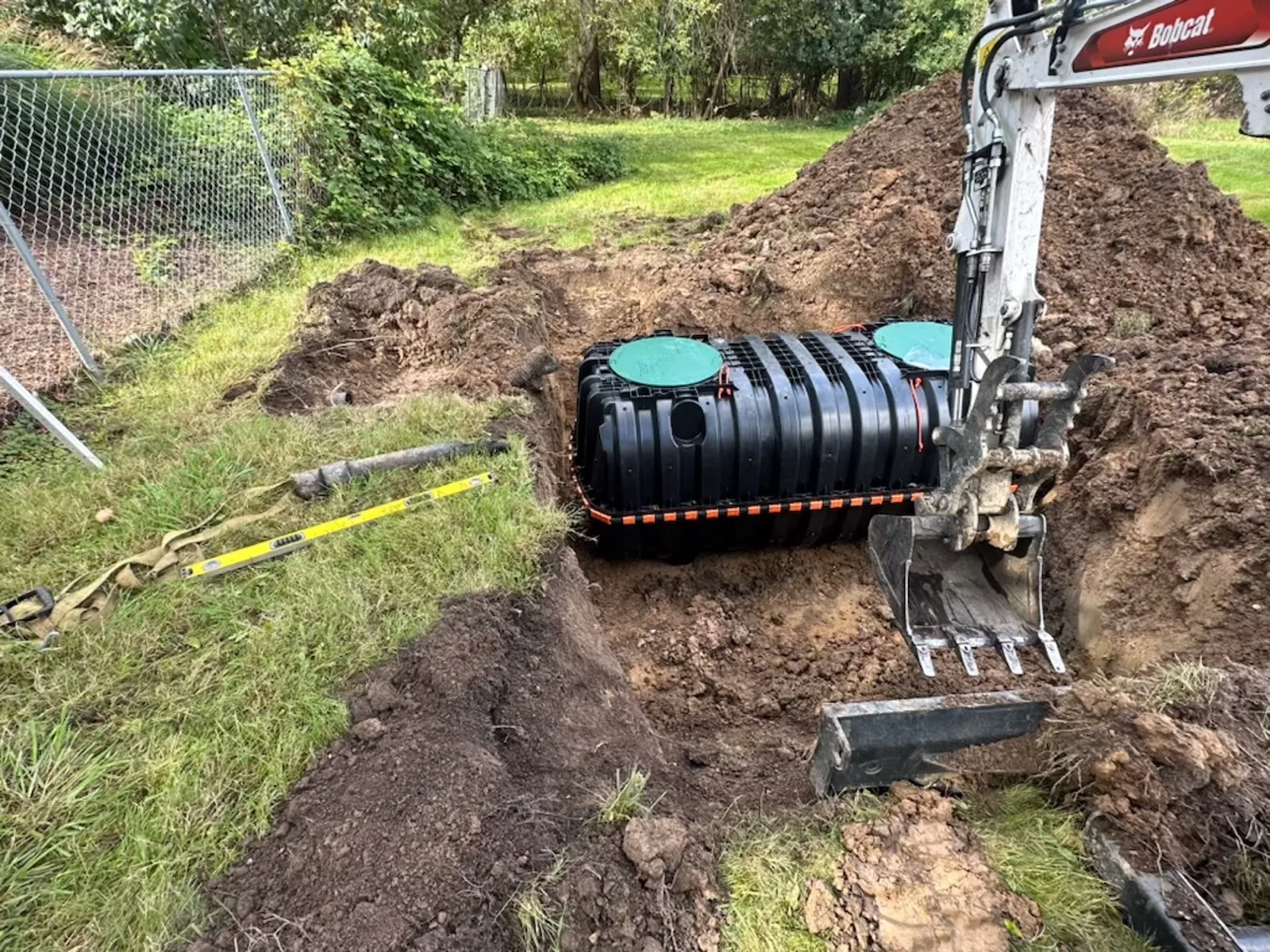
The machine work takes about a week. The project takes about a month or two. Contractor timelines across the industry put the on-site build for a conventional system at 3 to 7 days, inside a full design-to-inspection project of roughly 3 to 8 weeks. In Vermont, where the design and permit come first by law, the calendar side is the part worth planning around.
Here is where the time actually goes on a septic system installation, and what moves each piece.
The dig days
| Phase | Time on site |
|---|---|
| Site evaluation and test pits | 1 to 3 days |
| Excavation and tank set, conventional | 1 to 2 days |
| Excavation for a mound system | 2 to 4 days |
| Drain field construction | 1 to 2 days |
| Connections, testing, inspection | 1 to 2 days |
| Full conventional build | 3 to 7 days |
A mound build runs longer than those totals suggest, because the fill has to be trucked in and placed in lifts, and the pump and controls get wired and tested. On lots with ledge near the surface, count on the mound math. Vermont requires 48 inches of natural soil to bedrock for an in-ground field but only 24 inches for a mound, so shallow ground forces the longer build.
The calendar weeks
The wrapper around the dig runs on paper and seasons:
- Design and soil work: 2 to 3 weeks. A licensed designer digs test pits, reads the soil, and draws the plan. This step decides your system type and most of your price.
- The state permit: no published clock. Vermont starts technical review only when the application is complete, so a tight application is the real accelerator. Corrections and payments have a 60 day window before an application can be rescinded.
- Scheduling and utility marking. Dig-safe marking needs a few business days of notice, and inspection visits book 24 to 48 hours ahead.
- The build week.
- Settling. The disturbed ground settles for a season before the final grade fully stabilizes. Fall installs green up the following spring.
Add it together and 3 to 8 weeks from first designer visit to a working system is the honest range for a straightforward lot, stretching toward 3 months on hard sites.
What stretches the schedule here
Ledge. Shallow bedrock forces the mound design, and rock inside the dig slows every bucket. We probe before pricing so this surfaces at the start, not mid-trench.
Frost and winter. Vermont buries sewer lines at least 4 feet deep, 5 feet where plowing happens, and frozen material cannot be used as backfill near the pipe. Winter installs are possible but slower and costlier, so most replacements that can wait for thaw should.
Mud season. From late March into May, soft town roads and saturated ground stall heavy equipment across this corner of Vermont. The working season for dirt runs late spring through fall, and the spring calendar fills first.
The wet-lot monitoring window. If your lot needs water table monitoring, the proposal is due to the state by March 1 and readings run through May 31. Miss the window and the project waits a year. This one deadline is the strongest reason to start the conversation in fall or winter.
The replacement area. New construction needs a second qualifying patch of soil held in reserve, which means more test pits and design. A straight replacement of a failed system skips this requirement, which is a genuine schedule advantage when a field gives out.
Living through a replacement
You stay in the house. Vermont’s rules allow continued use of a failing system while the fix is actively underway with the state’s authorization, and the old system keeps working until the new one connects. Water is typically off for hours on switchover day, not days. If the system has failed hard and the house cannot wait on a full rebuild, septic repair work can often buy the time the permit process needs.
The short version
Call early, and the whole thing fits inside one season: designer and test pits in spring, permit through early summer, a one-week build, and grass growing back by fall. Call in August about a failing field and it still works, just tighter. Call (802) 681-6842 and we will map your project onto the calendar for free.