
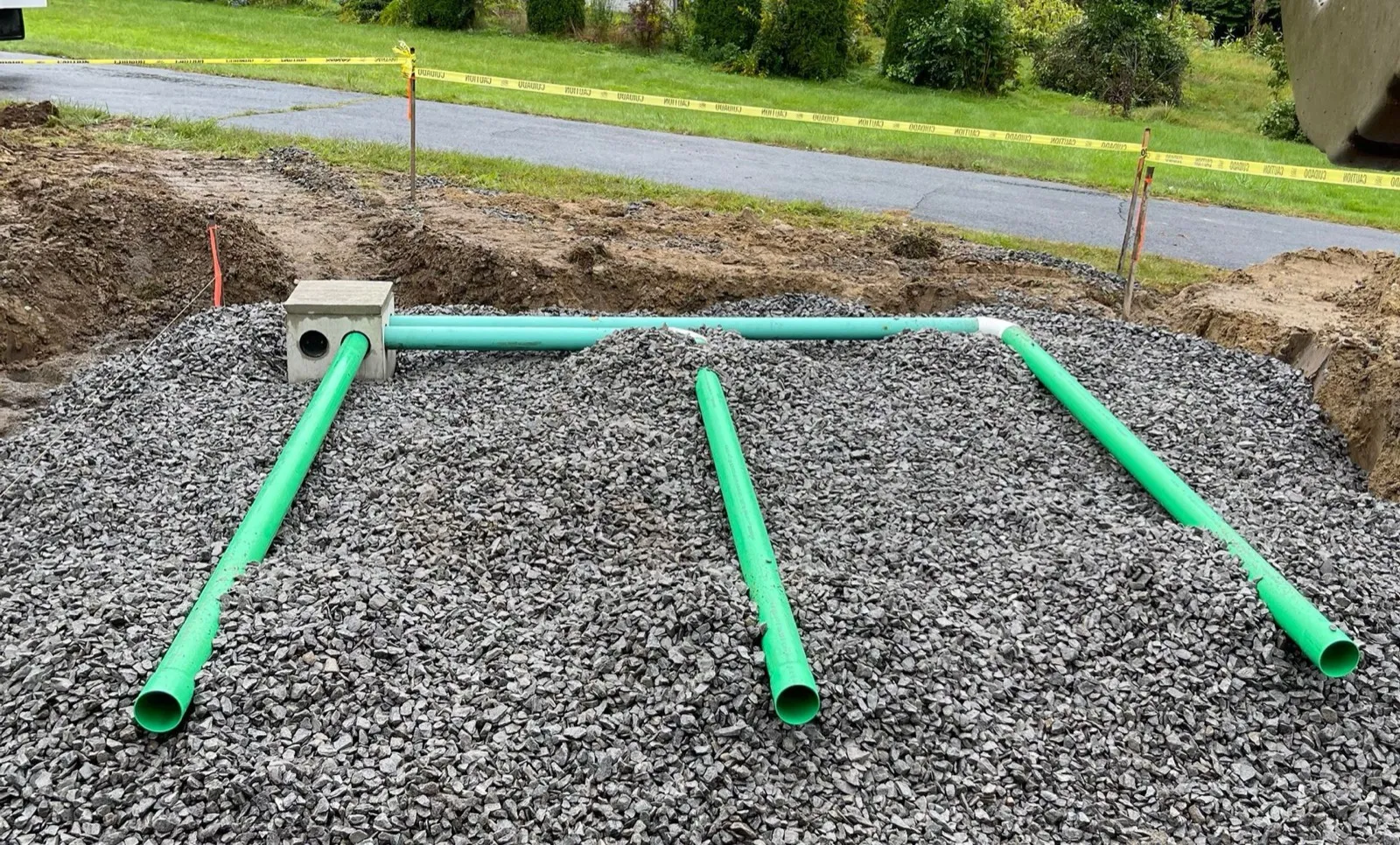
What are the signs your septic system is failing?
The signs show up in a reliable order: drains slow and gurgle inside the house, the lowest fixture backs up, then the yard starts talking. Damp or spongy ground over the tank or drain field, sewage odor outside, and a stripe of bright green grass that stays lush in dry weather are all on EPA’s official warning list. Any one of them means the system is holding or surfacing water it should be moving.
Catching the early signs is worth real money, because the difference between a repair and a replacement is usually thousands of dollars. Our septic repair work starts with finding which part actually failed, and the signs point at the part.
The warning list, inside out
Inside the house first. Toilets drain slow, tubs gurgle, and the lowest drain in the house, often a basement floor drain, backs up before anything else. Symptoms that come and go fool people: a nearly full tank drains fine on a light day and backs up on laundry day.
Then the yard. EPA’s outdoor signs: standing water or damp spots near the tank or drain field, sewage odors, and bright green, spongy grass over the system even during dry weather. The University of Minnesota’s septic program adds a subtle one: grass over the field greening up earlier in spring than the rest of the lawn.
Then the serious ones. Wastewater surfacing on the ground, discharge reaching a ditch or stream, or high nitrate and bacteria readings in a well test. At that point the system is failing by any definition, including Vermont’s legal one, and continued use becomes a permit problem as well as a health problem.
What actually causes it
The two big authorities name different lead causes, and both are worth knowing. EPA blames poor maintenance and design: skip the pumping, and solids migrate out of the tank and clog the field. The University of Minnesota blames excess water: too much flow keeps the soil saturated, and saturated soil cannot treat anything.
Both roads end at the same place. The drain field is what dies. The rest of the cause list, each documented:
- Biomat thickening with age. EPA puts the field’s useful life around 25 to 30 years before the natural biomat in the trenches thickens enough to slow drainage.
- Roots. Tree and shrub roots ensnarl and crush field pipes. Nothing woody belongs over a field.
- Vehicles. Driving or parking on the field compacts soil and crushes pipe. The only traffic a field should see is the mower.
- Water mismanagement. Roof drains, sump pumps, and surface runoff directed at the field keep it saturated.
- Old steel tanks. A steel tank past 15 or 20 years has often rusted through its baffles, which sends solids straight to the field.
The spring problem in this corner of Vermont
Cold-climate systems fail on a calendar. Snow is the field’s winter insulation, and compacted snow, from plow piles, snowmobiles, or foot traffic, insulates poorly and invites freezing. Then the melt comes, saturates the ground, and a field that needs three feet of unsaturated soil beneath it to work has none. That is why septic calls here spike in March and April.
Two rules for the season: keep plowed snow off the field, and never try to thaw a frozen system with fire, antifreeze, salt, or running water. The safe thaw tools are a professional’s steamer or jetter. A system that fails every spring counts as a failing system, and it is telling you the field is near its end.
Repair or replace: how the call gets made
The frame that holds up: components get repaired, drain fields get replaced. Here is the money on each side, from HomeAdvisor’s published figures.
| Fix | Typical cost |
|---|---|
| Septic repair, typical range | $627 to $3,040 |
| Baffle replacement | $300 to $900 |
| Pump repair | $250 to $400 |
| Broken septic line | around $600 |
| Effluent filter | $200 to $300 |
| Drain field replacement | around $7,000 |
| Full system replacement | $3,589 to $12,463 |
A backup caused by a clogged filter, a failed baffle, a root-blocked line, or a dead pump is a repair, often a one-day one. Ponding over a 25-plus-year-old field is usually a replacement conversation, and in Vermont that conversation includes a state permit and a licensed designer, which our septic system installation page walks through. Vermont homeowners staring at a big replacement should also know the state runs replacement loan programs for failed water and wastewater systems, through the Department of Environmental Conservation.
One honest caveat: age alone does not decide it. Inspectors have seen fields last 50 years and others fail in their first season. The tank tells the story. We open the lids, read the levels, and the water tells us which side of the line your system is on.
The cheapest fix is the calendar
EPA’s numbers make the argument: pumping every 3 to 5 years costs a few hundred dollars a visit. Twenty years of skipped pumping costs a drain field. If your system is showing any sign on the list above, call (802) 681-6842. Finding the failed part is a same-visit job, and you will know whether you are looking at a repair bill or a replacement plan before we leave.