
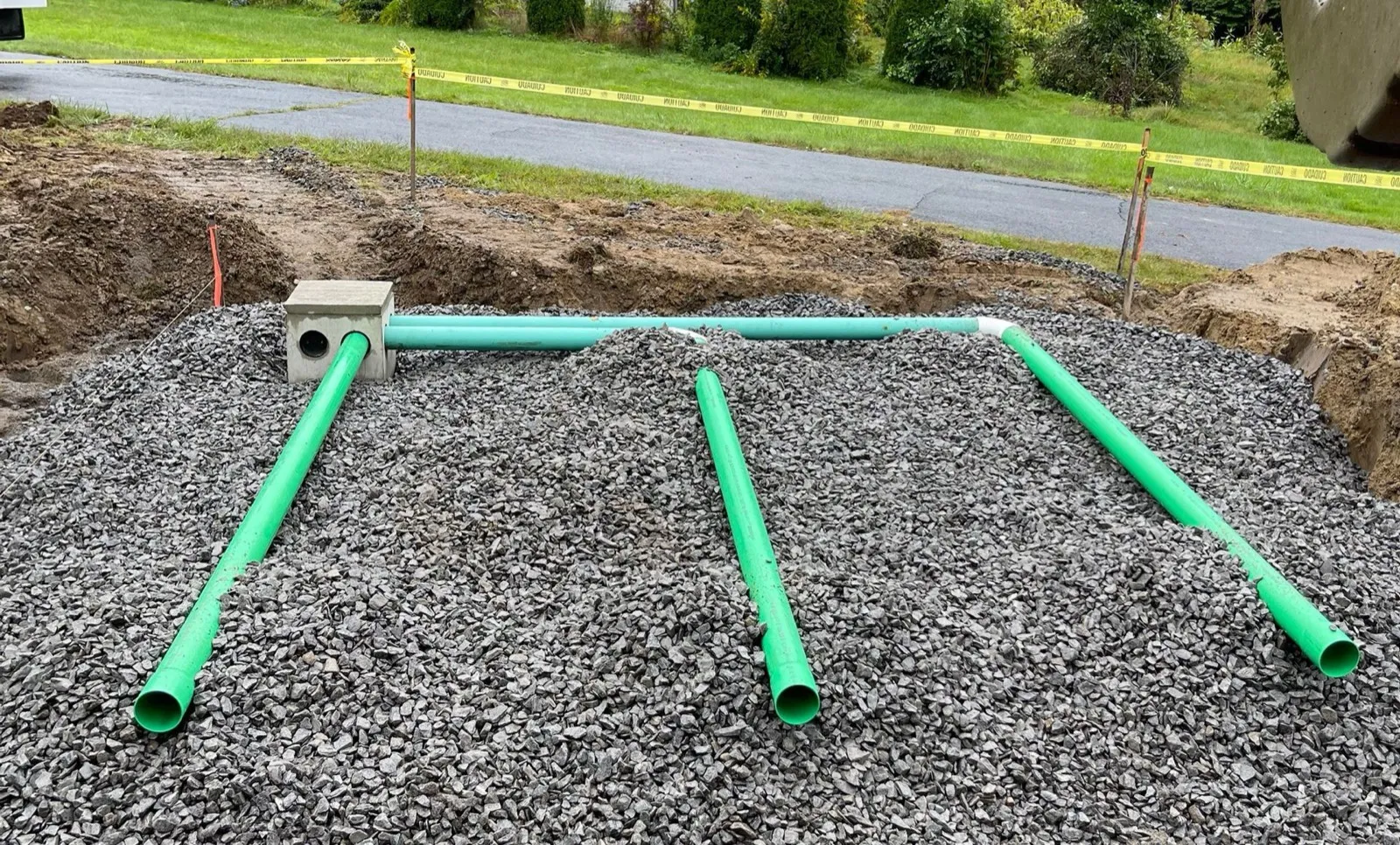
How do septic permits work in Vermont?
Every new or replacement septic system in Vermont runs through one state permit: the Wastewater System and Potable Water Supply Permit, issued by the Department of Environmental Conservation. A licensed designer draws the system, the landowner signs the application, the regional office reviews it, and the system cannot legally be used until an installation certification lands back at the state. The fee for a typical home is $306.25.
That is the whole shape of it. The details below are where projects get stuck, and where a few real exemptions save homeowners money. We handle this process alongside the dig on every septic system installation.
When the permit is required
The rules list the trigger actions. The ones that matter to homeowners:
- Building a new system, or replacing an existing one
- Building a new home, or reconstructing one
- Modifying a home in a way that increases design flow. Adding a bedroom to a septic-served house is the classic case
- Using or operating a failed system
- Starting construction on any of the above, including foundation and site work that touches the system
Two things that do not trigger a permit: adding plumbing fixtures inside a single family home, and homes, systems, and lots that were substantially complete before January 1, 2007 and have not been modified since. That last one is Vermont’s clean slate rule, and plenty of older Pownal and Bennington properties still sit under it.
The minor repair exemption saves real money
Not every septic fix needs a permit. The rules exempt minor repairs and minor replacements, which include:
- Replacing a septic tank
- Replacing a distribution box
- Repairing or replacing a pump and its switches and controls
- Replacing the pipe from house to tank, or tank to field, in the same approximate location
- Replacing a crushed distribution pipe in a field a designer says has not failed
Same approximate location means within 10 feet of where it was, and no closer to any water source. If your problem is on that list, the job can start as soon as the parts and the machine arrive. This is a large share of the septic repair work we do. What never qualifies as minor: a new drain field, a bigger system, or anything that raises design flow.
You can dig it, but you cannot design it
Vermont does not license septic installers. The state says so plainly, and the rules define an installer as simply the person who builds the system. What Vermont does license is the designer, through the Office of Professional Regulation, and the rules require every plan, site sheet, and supporting document to be prepared and signed by one.
The designer classes matter to your budget. A Class A designer can design conventional gravity systems. Mounds, bottomless sand filters, and pressure distribution require Class B. If your lot has shallow ledge, you need the designer class that matches the system your soil forces, and that is settled at the test pits.
Three more legal checkpoints on the way to a working system:
- Before any site work, a designer flags the field perimeter, the replacement area, and the water source, and the landowner must keep the flags up.
- If the build drifts from the approved design, the deviation rules kick in. Moving more than half the field, adding a pump station, or changing the system type all force a permit amendment.
- Before first use, an installation certification goes to the state. The permit is invalid for use until the state has it.
Failed systems run on a clock
A failed system is one that pools sewage on the surface, backs up into the house, or discharges to water. Using one is prohibited except while the owner is actively fixing it with the state’s blessing. The replacement permit carries a build-by date, and the DEC sends reminders at three months, two months, and two weeks out. Extensions exist, but you have to ask before the date passes.
The useful escape valve for tight lots: the variance. Vermont allows variances from technical standards for replacement systems specifically, on the logic that any compliant new system beats a failing old one. On a small village lot where the full setbacks cannot be met, the variance is often what makes a legal replacement possible at all.
The tri-state wrinkle
We work all three sides of the state corner, and the permit changes at each line. New York has no state septic permit; the county health department reviews systems under Appendix 75-A, which for Hoosick Falls and Troy means Rensselaer County. Massachusetts runs Title 5 through the local board of health, so Williamstown and North Adams each permit through their own town. Vermont is the only one of the three where the state itself issues the permit. Whichever side your property sits on, we build to that system’s paperwork.
Where to start
Call before you hire anyone. The order that works: a site conversation, then a licensed designer and test pits, then the application through the ANR Online portal to the Rutland regional office, then the dig. The permit fee is $306.25. The expensive decisions all happen at the test pits, which is exactly when you want the installer and the designer talking to each other. Call (802) 681-6842 and we will get the sequence moving.